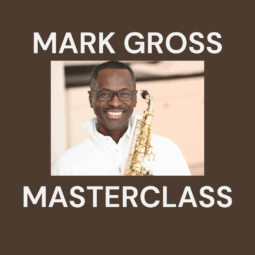
This masterclass features Mark Gross, a distinguished saxophonist originally from Baltimore, Maryland, now based in New York, offering insights into his approach to jazz improvisation focused around the jazz standard “Recorda Me”. The session carefully blends personal history, musical influences, conceptual discussions on scales and modes, and practical improvisation exercises to provide musicians with tools to deepen their jazz language and personal expression.
Intoduction:
Mark’s Early Musical Development and Background
Mark, originally from Baltimore, Maryland, grew up in a musically rich environment with seven siblings, many of whom were musicians.
His father was a preacher who played piano and saxophone, and music was always part of the household through family activities and church choir.
Mark’s formal music education began in elementary school, continuing through a prestigious performing arts high school in Baltimore.
Initially interested in classical music, Mark transitioned towards jazz during college, especially influenced by the hard bop style of Cannonball Adderley.
Influences on Mark’s Musical Style
Cannonball Adderley was the primary influence for Mark’s jazz style, particularly his hard bop approach.
Earlier influences included Charlie Parker (Bird), and commercially successful jazz players like Grover Washington Jr. and David Sanborn.
Mark emphasized the importance of learning from a wide range of players to develop a broad stylistic awareness.
Other major saxophonists impacting Mark’s approach include John Coltrane, Ben Webster, Dexter Gordon, Johnny Hodges, Benny Carter, and Joe Henderson.
Philosophy on Developing a Personal Voice
Mark stresses intensive listening to multiple players, not with the intention to mimic but to deepen understanding and develop one’s unique musical personality.
Awareness of different styles and sounds helps musicians adapt authentically to various musical contexts and enhances employability.
He insists that an identifiable personal voice is a synthesis of influences and individual creativity rather than simple imitation.
Musical knowledge from various traditions enriches improvisation and allows for authentic expression on any instrument.
Masterclass:
Philosophy of Approaching Jazz Improvisation
Scale and Modal Concepts: Arabic & Harmonic Major Influences
Application to Recorda Me and Two-Five Progressions
Motivic Development and Rhythmic Variation
Practical Exercise Approach: Playing Across Changes
Listening and Analysis of Joe Henderson’s Performance
Final Thoughts, Q&A and Key Insights
This masterclass provides a rich, detailed study blending traditional bop vocabulary with unique modal and world-music influences, illustrating how modern jazz improvisers can expand their stylistic and technical palette thoughtfully while honoring the core of jazz tradition.